
TrumpRx
How Does This Work?

TrumpRx is a prescription drug pricing initiative launched by the U.S. federal government in 2026. It’s centered around a government-operated website at trumprx.gov that displays discounted prices on selected prescription medications and connects consumers to ways of buying them at those prices.
It is not an e-retail pharmacy. It is basically a website that functions as a market facilitator. It is posting the products that the manufacturers have agreed to offer “most favored nation” prices to the cash pay only customers in America. The site states this is the initial offering list with an intention to add more.
But upon analyzing the offers I can tell you this program is more hype than beef. This reminds me of a blog I wrote where I mentioned then, President Biden’s, “pharma sweetheart deal” for drug discounts for Medicare beneficiaries.
Excerpt:
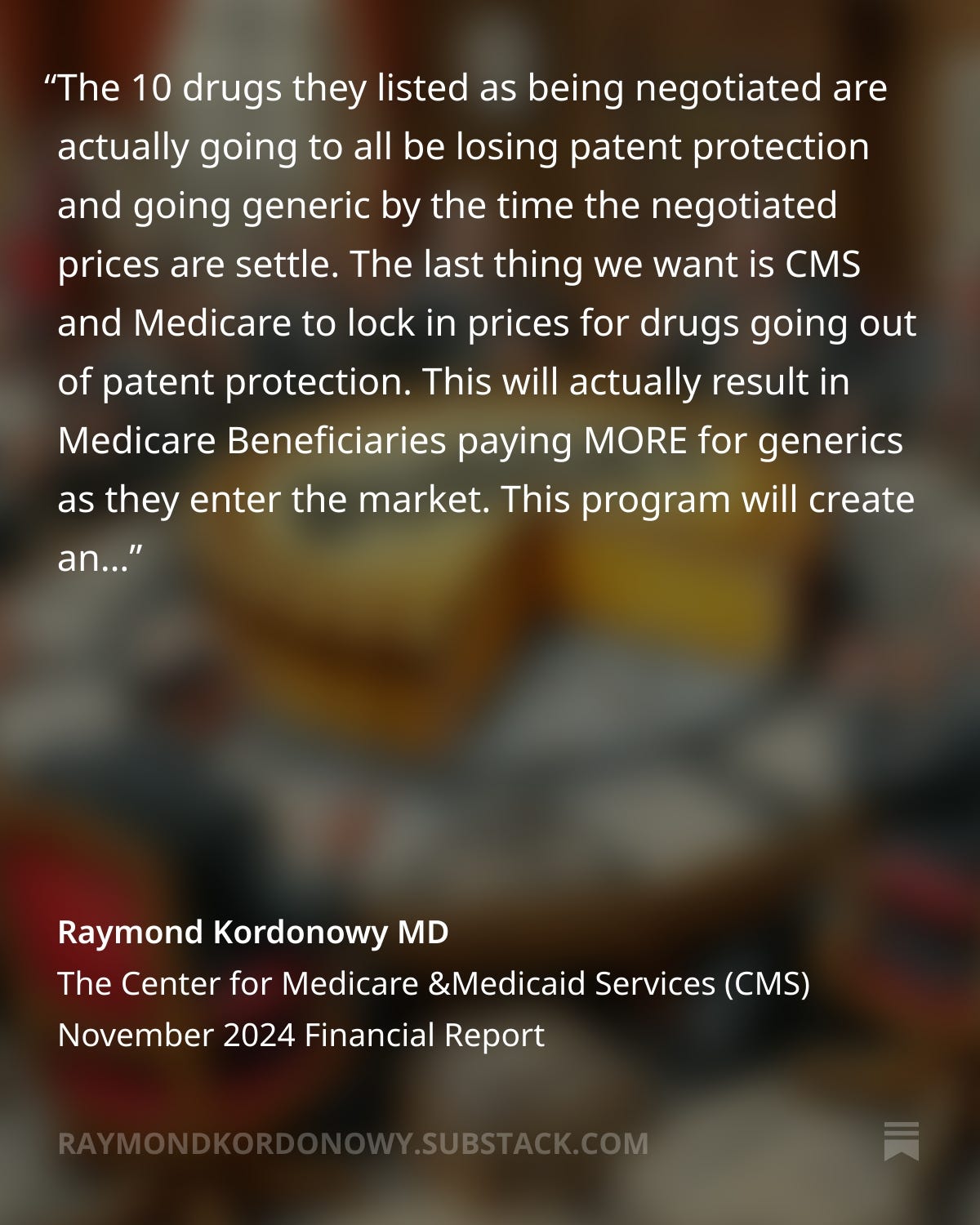
Well…. TrumpRx is No Different!
Clearly the president didn’t have the right people in the room when he “got down and dirty” with big pharma. Nearly all of the pills being “offered” on Trump Rx can be purchased in the generic form at a further fraction of the cost of the “big discount” on name brands. This means if people are gullible enough to use the program for the pills, Big Pharma gets to take a lost share from the generic market. This leads to patients paying a premium for a brand name, even when a cheaper, equally effective equivalent exists.
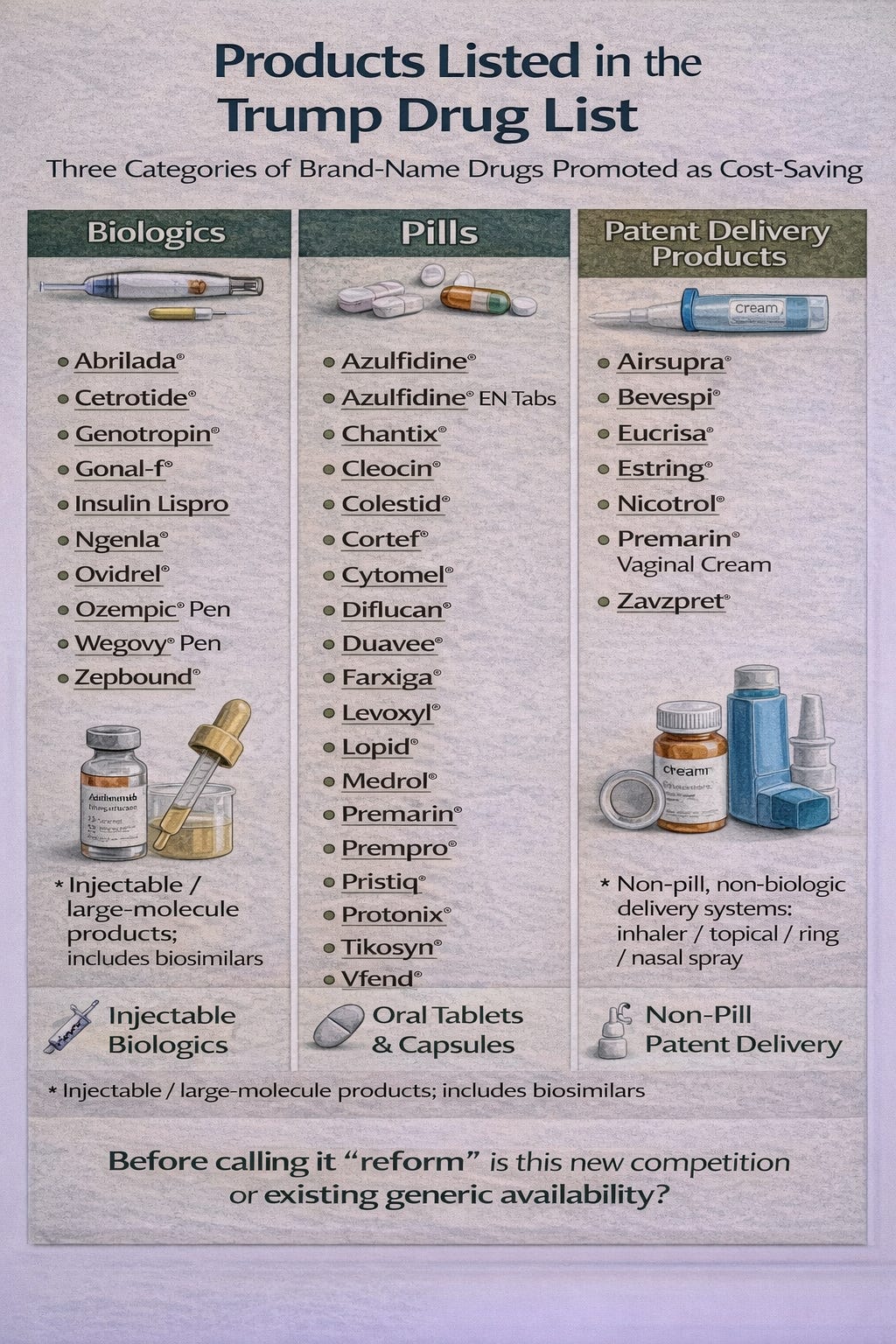
After analyzing the offerings in more detail, we can see three medication categories within this government formulary. The most significant from a cost savings perspective is the biological grouping. I will save the latter part of this post to dive into that in more detail. This part of the pharmaceutical market is the most difficult to understand AND appears to have the most market distortion and usury in the present insurance payment model. After we walk through this project, I will summarize where I think there is actual benefit for consumers. It will be a pretty short list, I do say.
The largest and second category is the pill grouping. I chose to include the pill Wegovy in the third category as it is a specialized delivery of a technically “pill” form as it is rapidly dissolving. Within the pill grouping there are three products that are presently name brand only. They are Duavee, Farxiga, and Xeljanz.
The third category includes a hodgepodge of products with relatively small market penetration with arguably the lung inhalation medications being an exception. Following is a illustration of the categories/list.
Understanding the Manufacturer Landscape
Pfizer currently represents the single largest manufacturer contributor to the TrumpRx medication list. While the program is presented broadly as a drug pricing initiative, the product mix shows a meaningful concentration from one company across multiple therapeutic areas, including hormone therapy, immunology, dermatology, and urology. This concentration does not invalidate the program, but it does provide important context when interpreting the scope of participation and the degree of market representation.
Pfizer-manufactured products on the TrumpRx list include:
• Abrilada® (adalimumab biosimilar)
• Duavee®
• Eucrisa®
• Premarin®
• Premarin® Vaginal Cream
• Prempro®
• Toviaz®
• Xeljanz®
This amounts to roughly one in five medications on the list coming from a single manufacturer.
To place that in perspective, the U.S. pharmaceutical market is vastly larger than the subset represented in this program. The FDA supply chain includes thousands of manufacturing facilities worldwide, and hundreds of companies hold approved drug applications for products marketed in the United States. Even when narrowing to recognizable commercial players with meaningful market share, there are dozens of major pharmaceutical manufacturers operating across branded and generic markets.
In practical terms:
• Hundreds of companies have FDA-approved drugs available in the U.S. market
• Dozens of major manufacturers compete across therapeutic categories
• Thousands of global manufacturing facilities supply the U.S. drug ecosystem
Against that backdrop, the TrumpRx list reflects participation from only a small fraction of the available pharmaceutical marketplace. Noting the large scale of the overall potential market, the present core manufacturers participating in Trump Rx are:
Pfizer
Novo Nordisk
Eli Lilly
AstraZeneca
Merck
Organon
Various smaller specialty manufacturers
How TrumpRx Works for Patients (Or Does It Work At All)?
TrumpRx is a cash-price medication program. It is designed primarily for people who are paying for prescriptions out of pocket rather than using insurance.
In practical terms, the website does two main things:
• It links patients to discount coupons (similar to GoodRx) that can be used at participating retail pharmacies.
• It connects patients to manufacturer pricing programs for certain medications, especially higher-cost specialty drugs and biologics.
The site itself does not manufacture medications, and it is not an insurance plan. It functions more like a pricing navigation tool. From my deep dive into this story, I would suggest it is more like a social services program than a marketplace.
When someone goes shopping, one of two things will happen. They will be linked to the GoodRx network OR they will be diverted to a specialized manufacturer fulfillment program. The manufacturer fulfillment program will basically result in a long form questionnaire that will be looking for any loophole to get them out of helping you. You will be asked upon your honor that you don’t have insurance. This is because they want to keep you trapped into a much more lucrative insurance prescription scheme. I will explain that a bit later in this post. You will next be asked to provide proof of income needs or ability. This process is couched in the phrase “meet eligibility requirements”.
For some higher-cost medications — especially biologics — patients may be routed to manufacturer programs.
These programs sometimes include:
• Income thresholds
• Insurance status questions
• Prior authorization confirmation
• Specialty pharmacy enrollment
• Physician paperwork
• Consent formsThis is because manufacturers already operate:
Patient Assistance Programs (PAPs) or affordability programs.
TrumpRx may be directing patients into those existing systems.
And Then There Is GoodRx
GoodRx is not insurance and it is not a pharmacy network owner. GoodRx is a price-aggregation and coupon platform that connects three parties:
• Pharmacy Benefit Managers (PBMs)
• Pharmacies
• Patients paying cash
The key point:
GoodRx uses existing PBM discount networks that pharmacies already participate in.
GoodRx didn’t individually contract with every pharmacy in America. They plugged into networks that already existed. As a side note, that is how Obamacare got people into insurance. The plans simply leased existing insurance contracts onto the ACA insurance card.
Biologics: Why They Are Different From Traditional Drugs
As I started this project, I was very excited to find patients a deal. Biologic medications are notoriously expensive and have their own sanctioned patent process. On TrumpRx, the first drug offering in the alphabetical drug listing menu is the biologic medication Abrilada® .
This is Pfizer’s version of a biosimilar biologic immune injection medication. It turns out Humira® from the pharmaceutical manufacturer AbbVie was the original inventor of the molecule and held patent protection until 2023. Now there are ten manufacturers making a version of this following the patent expiration.
Biologic medications are produced using living systems rather than chemical synthesis. They are typically large, complex proteins — such as monoclonal antibodies, hormones, or engineered peptides — whose final structure depends not only on the genetic sequence but also on the manufacturing process itself.
Because of this complexity, biologics cannot be copied in the same way that traditional small-molecule drugs can.
The Core Regulatory Distinction
Traditional drugs follow a generic pathway.
Biologics follow a biosimilar pathway.
Small-Molecule Drugs
• Chemically synthesized
• Structurally simple and fully characterizable
• Generic versions are chemically identical
• Approval based primarily on pharmacokinetic equivalence
Biologics
• Produced in living cells
• Large, structurally complex proteins
• Manufacturing process affects final product
• Exact duplication is impossible
Therefore: Biologics have “biosimilars,” not true generics.
Biologic drugs are fundamentally different from traditional medications. They are complex proteins produced in living systems, and their structure depends on the manufacturing process itself. As a result, follow-on versions are biosimilars — highly similar but not identical — rather than true generics. Multiple patent layers and regulatory exclusivity periods further limit competition, which is why biologic markets tend to evolve more slowly and maintain higher prices than conventional drugs.
Among the biologic medications listed on the TrumpRx platform, only a minority currently have biosimilar competition. Most of the highest-profile drugs, including semaglutide and tirzepatide products, remain under active patent protection with no approved biosimilar alternatives. As a result, price reductions in these categories reflect manufacturer pricing decisions rather than true competitive market forces.
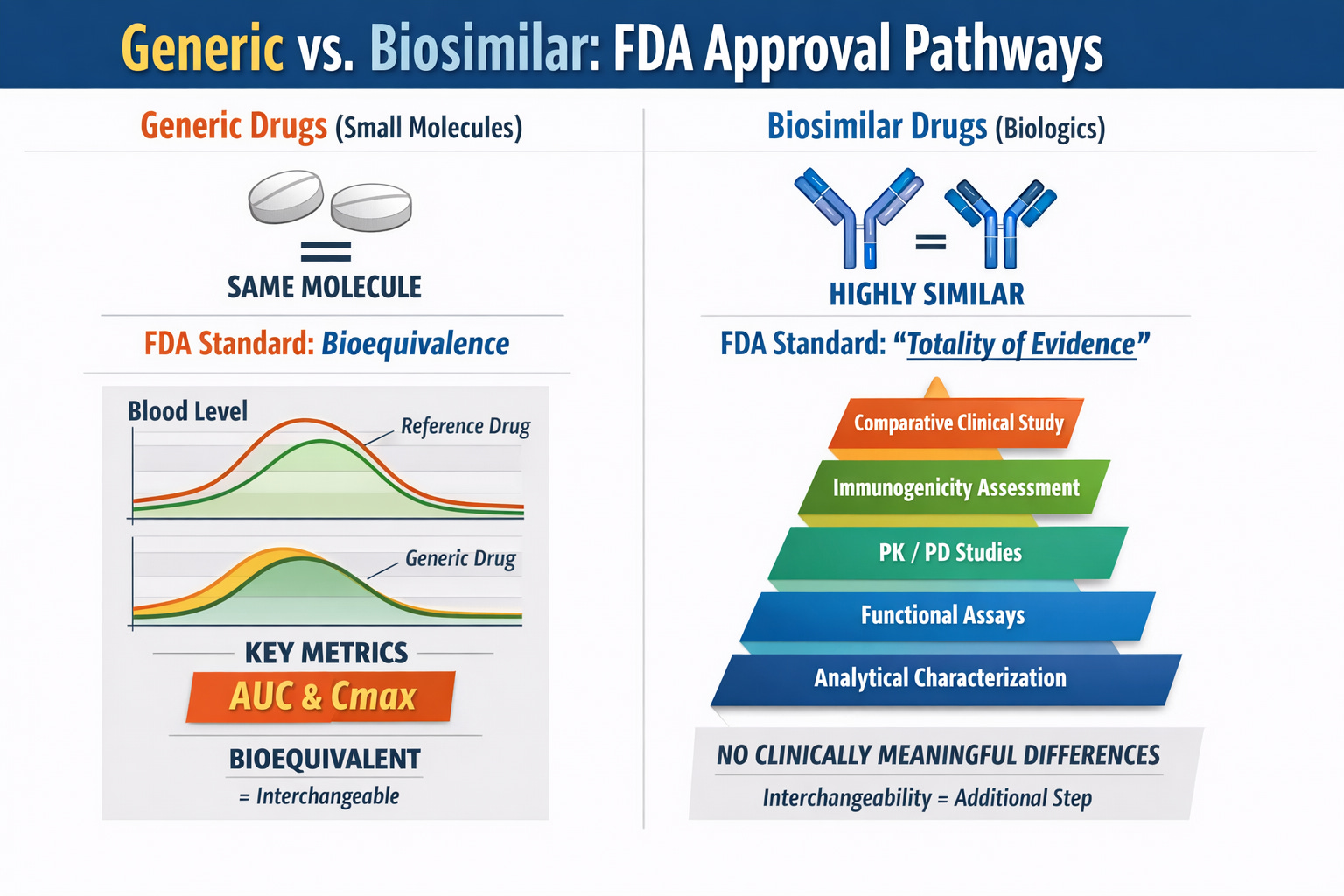
While getting affordable generic pill alternatives to the market happens routinely, this isn’t the case for biosimilar products due to the unique methods of production and getting regulatory approval for these compounds.
Fact:
International markets offer somewhat greater biosimilar competition for older biologic classes, but the newest high-cost drugs — particularly GLP-1 and dual-agonist therapies — remain under patent protection worldwide. Geography does not overcome patent barriers, which means pricing power for these products remains largely manufacturer-controlled across global markets.
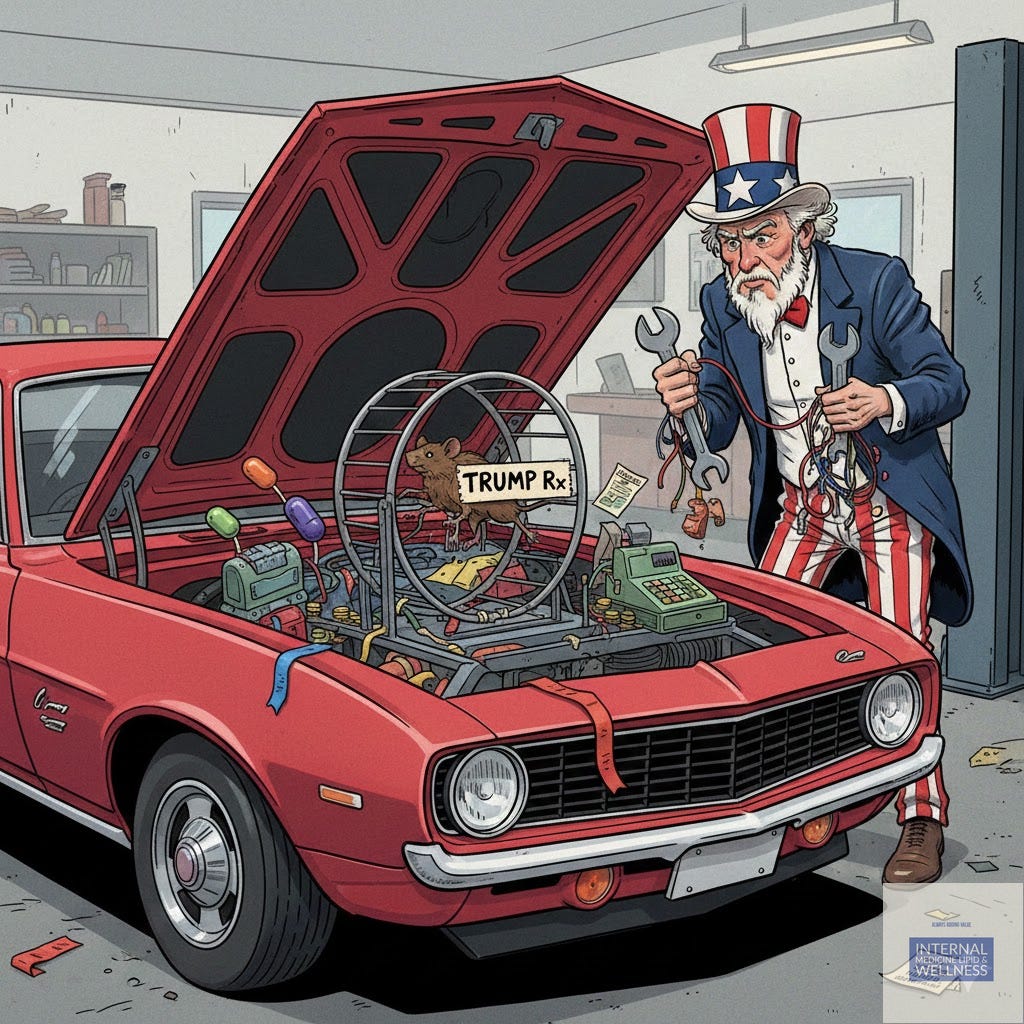
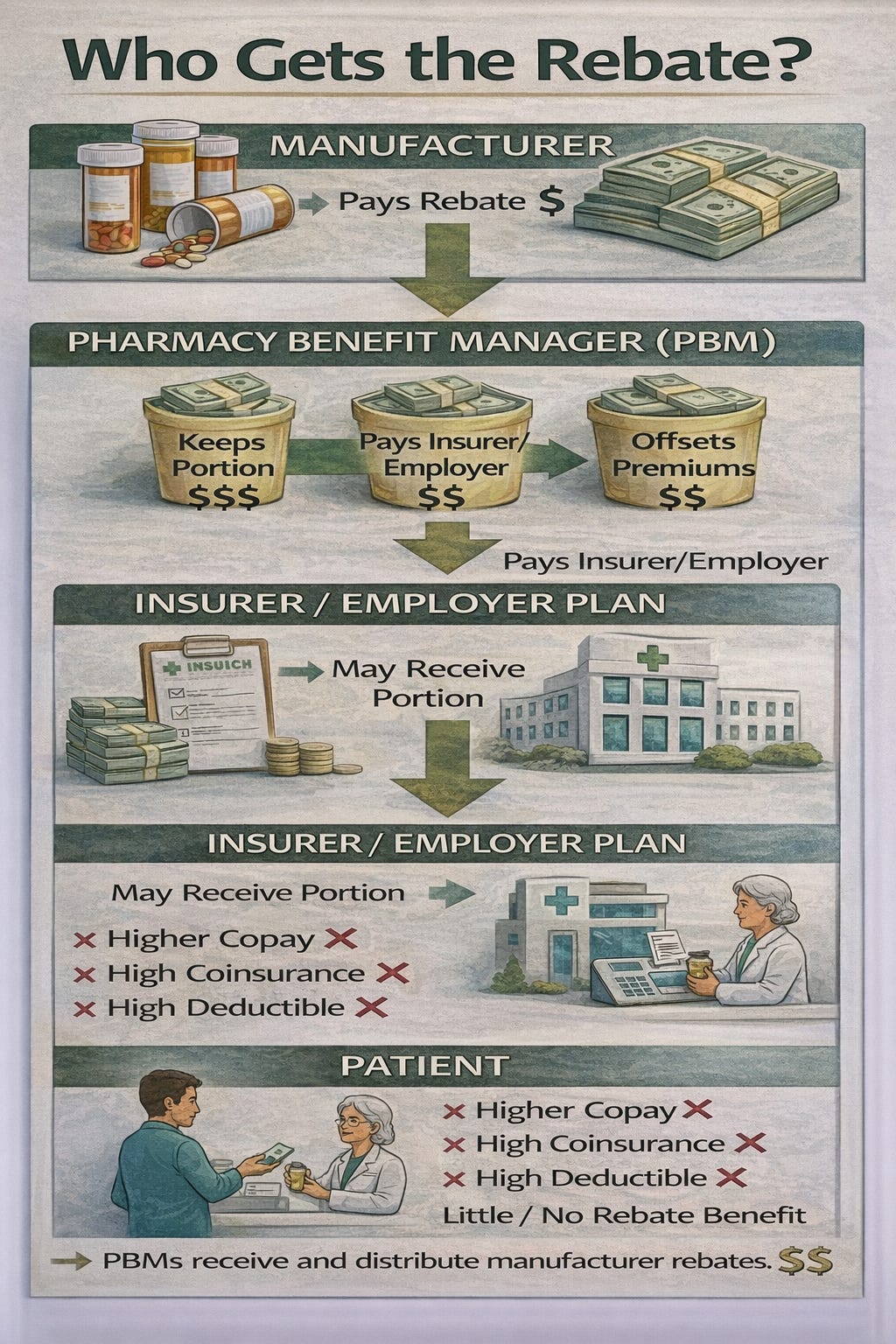
This last illustration shows the public what a giant rip off our present health insurance funded prescription fulfillment process is. Recall, GoodRx harnesses itself into this scheme.
My Conclusion:
If you are on an expensive biologic medication and are prepared to provide personal and financial information to the manufacturer, this site may be helpful. You likely can access these same programs by going to the manufacturer existing websites. If you are on the few name brand products in the other categories, you will have a decent chance of getting a GoodRx coupon and access better prices. A large majority of the non biologic prescriptions already have very affordable generic alternatives that your local pharmacy, our dispensary (for our patients), Amazon Rx or Mark Cuban’s e-retail pharmacy can fill for you.
There are other prescription discount services like GoodRX. SingleCare and Scriptsave
perhaps the intent was to just get them on the drugs to improve health overall as part of RFK Jrs program and not to fool us. But thanks for the thesis./